Stop Selling Features. Talk About Them.
When Apple launched the iPod, they didn't say '5GB storage'. They said '1,000 songs in your pocket'. One of those sentences you remember. The other you forget immediately. Here's why, and what it means for how we communicate anything to anyone.
Once you've established contrast, you have to make your message stick. The best way to do that isn't with numbers, but with images the brain can't ignore.
When Steve Jobs introduced the MacBook Air in 2008, he didn't start with technical details. He walked to the front of the room, pulled a manila envelope out of his bag, and pulled the laptop out of the envelope.
The envelope was thinner than the laptop. That was the whole message.
He didn't need numbers. He used a real object everyone knew. The old brain understood that image instantly. The thinking brain caught up later. This gap between how we talk and how the brain listens is what this post is about.
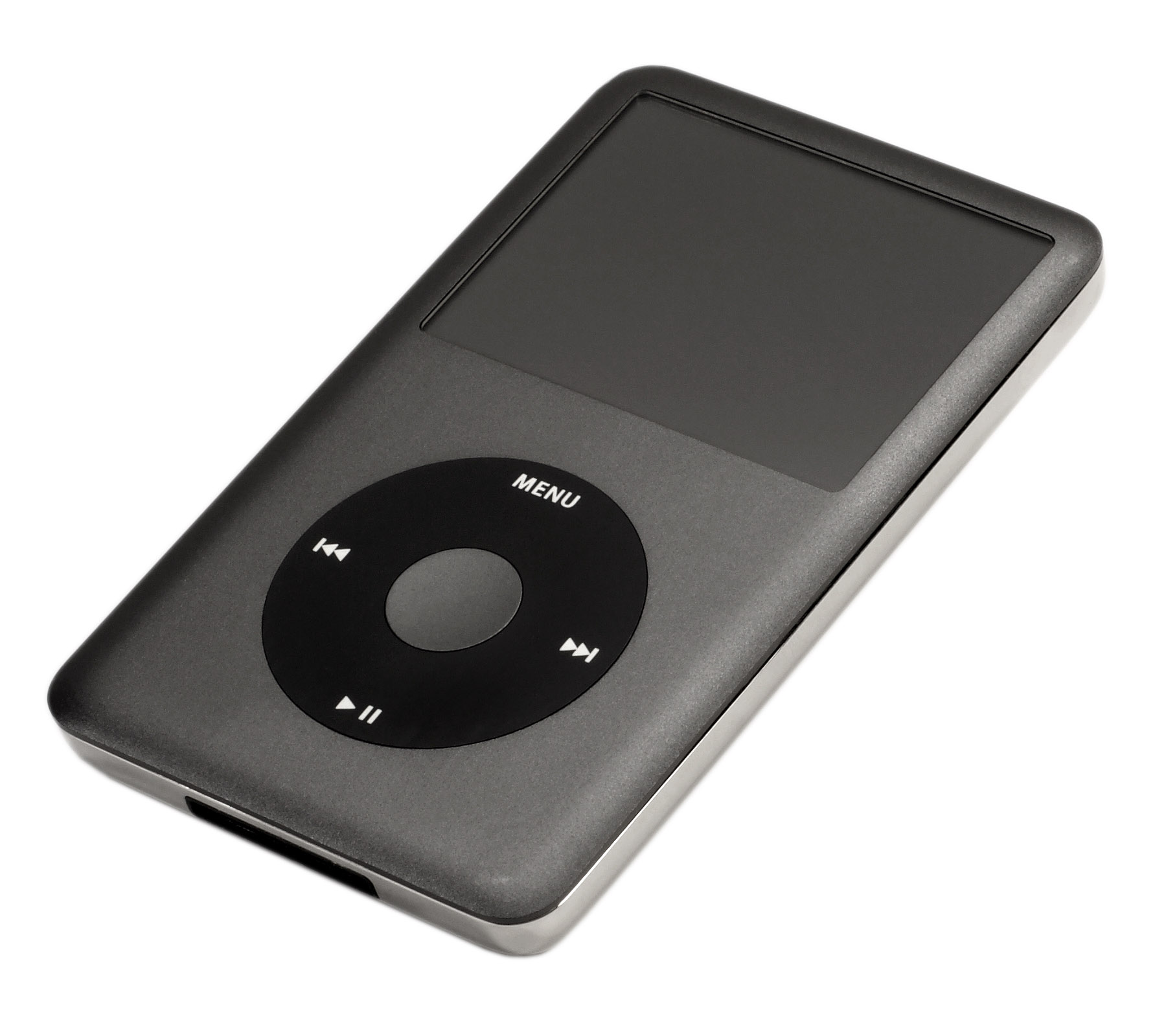 ExpandiPod Classic: the device Jobs described as "1,000 songs in your pocket"
Source: Wikimedia Commons, Public Domain
The Idea of "Chunking"
The brain doesn't like long lists. It likes to group things into chunks. An expert chess player doesn't see sixty-four separate squares: they see patterns.
Great speakers use this. Instead of listing ten different things a product does, they find one simple phrase that explains everything. "1,000 songs in your pocket" was the "chunk" for the iPod. It described how your life would change, not just the hardware.
Talking About "Me"
The old brain is very interested in itself. It looks at the world and asks one question: "What does this mean for ME?"
If your message doesn't help the listener stay safe, comfortable, or happy, the brain just ignores it.
- Bad: "Our product uses industry-leading technology." (The brain stops listening).
- Good: "You'll never lose your work again." (The word "You" is right at the start).
The simple rule: "5GB storage" is a fact about a product. "1,000 songs in your pocket" is a fact about your life.
Features vs. Benefits
- Water-resistance: You don't have to take it off when it rains.
- Battery Life: You can use it all day without worrying about a charger.
- Storage: 1,000 songs in your pocket.
A feature is a fact for the thinking brain. A benefit is a reason to care for the emotional brain. Most people fail because they give the facts before they give a reason to care.
Make It Real
Ideas you can't see or touch (abstract language) are hard for the old brain to hold. Real-world examples (concrete language) are not.
The brain evolved in a world where things were physical.
- Abstract: "A billion dollars in losses." (Most kids or adults can't even imagine that much money).
- Tangible: "Enough money to pay everyone in this room a salary for the next 200 years." (You can imagine that immediately).
If your idea isn't landing, it's not because the audience isn't smart. It's because the old brain doesn't speak in abstract ideas. It speaks in things it can touch, see, and feel.
This need for "real things" is proof that our ancient hardware is still in charge, even as computers and AI start doing more of our work. To stay valuable, we have to lean into a different set of human skills.
Further Reading and Watching
- Video: Steve Jobs introducing the original iPhone: Apple
- Book: Start With Why: Simon Sinek
- Wikipedia: Chunking · Marketing mix · Psychology of persuasion · Steve Jobs
Keep reading